

“I guess in my pictures you’re either doomed or you’ve got yourself a hell of a job.” — George A. Romero
George A. Romero was one of the most important and influential filmmakers in American horror. Widely known as the “Godfather of Horror,” Romero did not simply popularize the modern zombie film; he reshaped what horror could do. His films were frightening, funny, angry, political, personal, and often deeply human. They asked audiences to look at monsters, institutions, media, consumer culture, violence, and social breakdown, then recognize something uncomfortably familiar staring back.
Romero’s work helped turn low-budget independent horror into a serious creative force. He made films outside the usual Hollywood system, often in and around Pittsburgh, with collaborators, friends, local actors, artists, technicians, and craftspeople. That independent spirit remained central to his identity. Romero was direct, rebellious, and resistant to easy categorization. His films could be grim, but they were never empty exercises in shock. Beneath the gore, chaos, and dark humor was a filmmaker using horror to examine the current social climate.
Early Life
George Andrew Romero was born on February 4, 1940, in the Bronx, New York, to Ann and George Romero. His father was a commercial artist, and Romero grew up surrounded by visual imagination, city life, and movies. His mother was Lithuanian, and his father’s family background traced from Spain to Cuba before coming to the United States.
Romero became fascinated with film at an early age. As a boy, he would travel by subway into Manhattan to rent film reels and screen them at home. One of the films that made a lasting impression on him was The Tales of Hoffmann, Michael Powell and Emeric Pressburger’s opera-based fantasy film. Romero later recalled how watching the film helped him understand that the magic of cinema was made through craft, design, editing, and invention. That realization made him feel as if actual filmmaking was within his reach.
As a teenager, Romero began making his own short films with friends. He experimented with 8mm cameras, homemade effects, and ambitious ideas that already hinted at his appetite for visual storytelling. After high school and time at Suffield Academy in Connecticut, he enrolled at Carnegie Institute of Technology, now Carnegie Mellon University, in Pittsburgh. Although he did not complete a degree, Pittsburgh became central to his life and career.
Pittsburgh, The Latent Image, and the Road to Night of the Living Dead
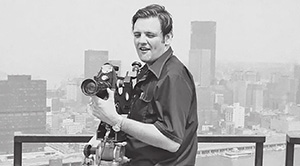
After leaving college, Romero began working in film production, commercials, industrial films, and short projects. In the early 1960s, he and Russ Streiner formed The Latent Image, a Pittsburgh-based production company that created commercials, industrial films, travelogues, and other commissioned work. The company gave Romero and his collaborators practical experience with cameras, editing, sound, lighting, production logistics, and client-driven filmmaking.
The Latent Image became a training ground for the group that would eventually help create one of the most important horror films ever made. Romero worked with collaborators, including Russ Streiner, Gary Streiner, John A. Russo, Rudy Ricci, Richard Ricci, Vince Survinski, Karl Hardman, Marilyn Eastman, and others who would become connected to the original Night of the Living Dead circle.
By the late 1960s, Romero and his collaborators wanted to move beyond commercials and make a feature film. The idea was practical as much as artistic: a horror film could be made cheaply, sold to a distributor, and shot with the resources they already had. Image Ten was created to produce the film.
Image Ten was created specifically to bring Night of the Living Dead to life. Formed by Romero and his collaborators, the company gave the group a formal structure for raising money, organizing production, and turning their idea into a completed feature film. What began as a practical independent filmmaking venture ultimately produced one of the most influential horror films ever made.
Night of the Living Dead
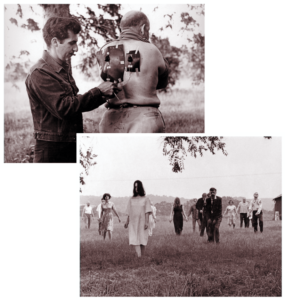
Released in 1968, Night of the Living Dead changed horror cinema. Directed by Romero, the film followed a group of strangers trapped in a rural Pennsylvania farmhouse while the dead return to life and consume the living. The movie was stark, raw, violent, and unnerving in a way that felt radically different from much of the horror that came before it.
The film’s power came partly from its simplicity. It placed ordinary people under impossible pressure and allowed fear, distrust, panic, and selfishness to become as dangerous as the monsters outside. Duane Jones’ performance as Ben gave the film a moral and dramatic center, while its ending remains one of the most devastating in American horror.
Although produced independently on a limited budget, Night of the Living Dead became a cult phenomenon. Its theatrical life grew through regional bookings, midnight screenings, television showings, and word of mouth. Over time, it was recognized not only as a landmark of horror but also as a major achievement in independent American cinema.
The film also helped define the modern zombie. Earlier films had used zombies in very different ways, often tied to hypnotism or voodoo traditions. Romero’s ghouls were reanimated corpses driven by hunger, and that concept became the foundation for decades of zombie films, television shows, comics, video games, and pop culture mythology.
The 1970s: Witches, Plagues, Vampires, and Zombies
After Night of the Living Dead, Romero did not immediately repeat himself. Instead, he explored different kinds of stories and tones. There’s Always Vanilla appeared in 1971 and remains an unusual entry in his filmography: a romantic comedy-drama and one of the few Romero films outside the horror genre.
He followed it with Jack’s Wife, later known as Season of the Witch, a film about domestic frustration, identity, and witchcraft. In 1973, he directed The Crazies, a story about a biological weapon accident that causes ordinary people to become violent and unstable. The film showed Romero’s recurring interest in institutional failure, government secrecy, military force, and social breakdown.
Around this period, Romero also began a major professional partnership with producer Richard P. Rubinstein. Together, they formed Laurel Entertainment, a company that would become central to the next phase of Romero’s career. Laurel gave Romero a stronger production base after the original Image Ten era and eventually became connected to several of his most recognizable projects.
After working on the Winners, a syndicated sports documentary series, Romero then directed The Amusement Park, a 1973 film commissioned by the Lutheran Society. Long unavailable to the public, the feature-length public service announcement uses an amusement park setting to explore aging, neglect, humiliation, and the cruelty of social systems. Its later restoration brought renewed attention to Romero’s ability to turn allegory into unsettling cinema.
In 1978, Romero released two major works. Martin offered a stripped-down, psychologically complex approach to the vampire myth. Rather than presenting a glamorous supernatural figure, Romero focused on a troubled young man who may or may not be a vampire. The result is often considered one of his most personal and critically admired films.
That same year, Romero returned to the undead with Dawn of the Dead. Set largely inside a shopping mall, the film expanded the zombie outbreak into a larger social satire. It was gruesome, funny, colorful, bleak, and unmistakably political. Its critique of consumer culture became one of Romero’s most famous themes, and the film remains one of the most celebrated horror sequels ever made.
The 1980s: Cult Classics and Comic-Book Horror
Romero entered the 1980s with Knightriders, an ambitious and deeply personal film about a troupe of motorcycle-riding jousters trying to preserve their own code of honor. Though not a horror film, it reflected Romero’s interest in outsiders, chosen families, leadership, loyalty, and the difficulty of surviving without surrendering to commercial pressure.
In 1982, Romero directed Creepshow, written by Stephen King. Inspired by the look and tone of 1950s horror comics, the anthology mixed ghoulish humor, revenge stories, monsters, and stylized visuals. The film became a cult classic and remains one of the most beloved horror anthologies ever made.
Romero returned to his zombie cycle with Day of the Dead in 1985. Darker, more claustrophobic, and more pessimistic than its predecessors, the film focused on scientists and soldiers living underground after the dead have overtaken the world. While initially less commercially successful than Dawn of the Dead, it has since been reappraised as one of Romero’s strongest works, especially for its themes of militarism, scientific ethics, authoritarianism, and the possibility that the dead may be more adaptable than the living.
Romero’s work also helped inspire Tales from the Darkside, a horror anthology television series that aired from 1983 to 1988. He was closely associated with the series and contributed as a creator, writer, and producer.
In 1988, Romero directed Monkey Shines, a psychological horror film about a paralyzed man and a helper monkey whose intelligence and aggression become increasingly dangerous. The film marked an important shift in his career, as it was his first feature made outside Laurel Entertainment after years of partnership with Richard Rubinstein.
That move began a new phase for Romero, where he developed a close creative partnership with producer Peter Grunwald, who worked with him off and on until the end of his creative career.
The 1990s: Poe, King, and a Return to Night
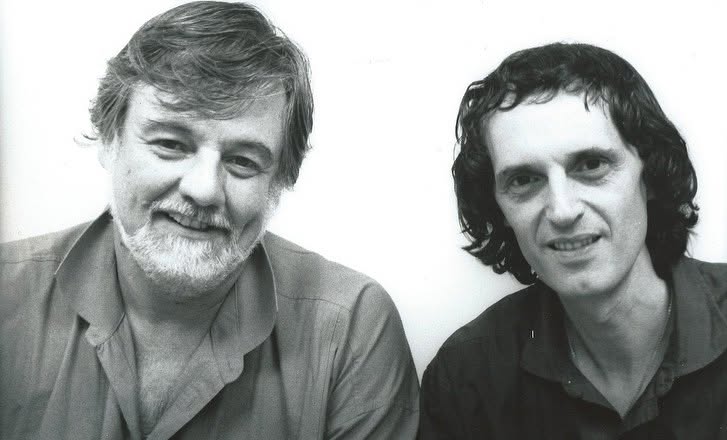
Shot in 1989 for a 1990 release, Romero collaborated with Italian horror master Dario Argento on Two Evil Eyes, an anthology film based on Edgar Allan Poe stories. Romero directed “The Facts in the Case of Mr. Valdemar,” while Argento directed “The Black Cat.”
That same year, Romero revisited his most famous work by updating the screenplay for the remake of Night of the Living Dead. Directed by Tom Savini, the 1990 version reimagined the original story with several notable changes, especially to Barbara’s character. Savini, a longtime Romero collaborator, had created makeup and special effects for films including Martin, Dawn of the Dead, Day of the Dead, Creepshow, and Monkey Shines, and had also appeared as an actor in several Romero projects.
Romero directed The Dark Half, a 1990 film released in 1993, based on a novel by Stephen King. The film continued his interest in divided identities, creative obsession, and violence emerging from the darker corners of the self.
The 2000s: Return of the Dead
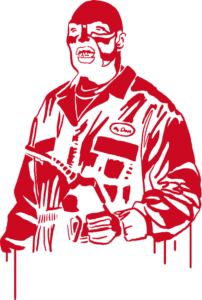
Romero returned to feature filmmaking in 2000 with Bruiser, a story about a man who wakes up to find his face replaced by a blank white mask. The film explored identity, rage, invisibility, and revenge.
In 2005, he returned to the zombie genre with Land of the Dead. Unlike the isolated farmhouse of Night, the mall of Dawn, or the mines of Day, this film imagined a fortified city where class division persists even after the collapse of civilization. The wealthy live in luxury while the poor survive below, and the dead begin to show signs of memory, organization, and purpose.
Romero followed with Diary of the Dead in 2007, using the found-footage style to examine media, documentation, and the impulse to record disaster instead of responding to it. In 2009, he directed Survival of the Dead, which focused on feuding families, inherited violence, and the futility of trying to preserve old conflicts in a ruined world.
These later zombie films extended Romero’s central idea: the living dead were never just monsters. They were mirrors. Throughout the series, the real danger often stemmed from human arrogance, denial, greed, tribalism, and a failure to cooperate.
Later Work, Comics, and Pop Culture Legacy
Romero remained active in the 2010s through appearances, writing, and expanded-universe projects. He appeared as himself in the “Call of the Dead” map for Call of Duty: Black Ops, where he became part of the very zombie mythology he had helped create. He also lent his voice to the video game Zombie Squash as the villain Dr. B. E. Vil.
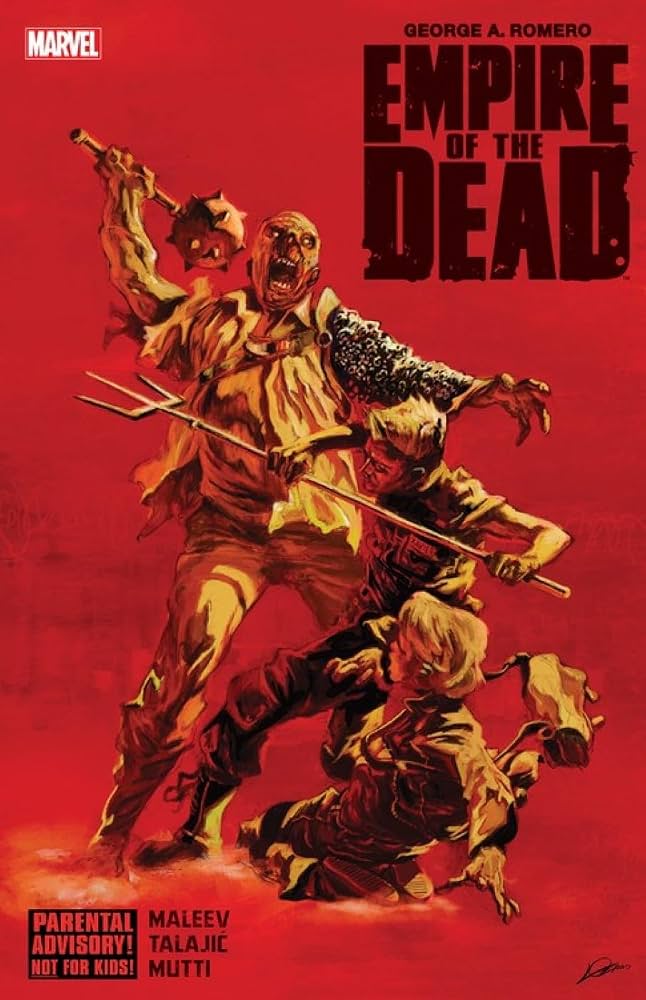
In 2014, Marvel Comics began publishing Empire of the Dead, a 15-issue miniseries written by Romero. The story combined zombies, vampires, and political power struggles in a new undead mythology. It showed that Romero was still interested in expanding the possibilities of horror, even after decades of influence.
Death and Legacy
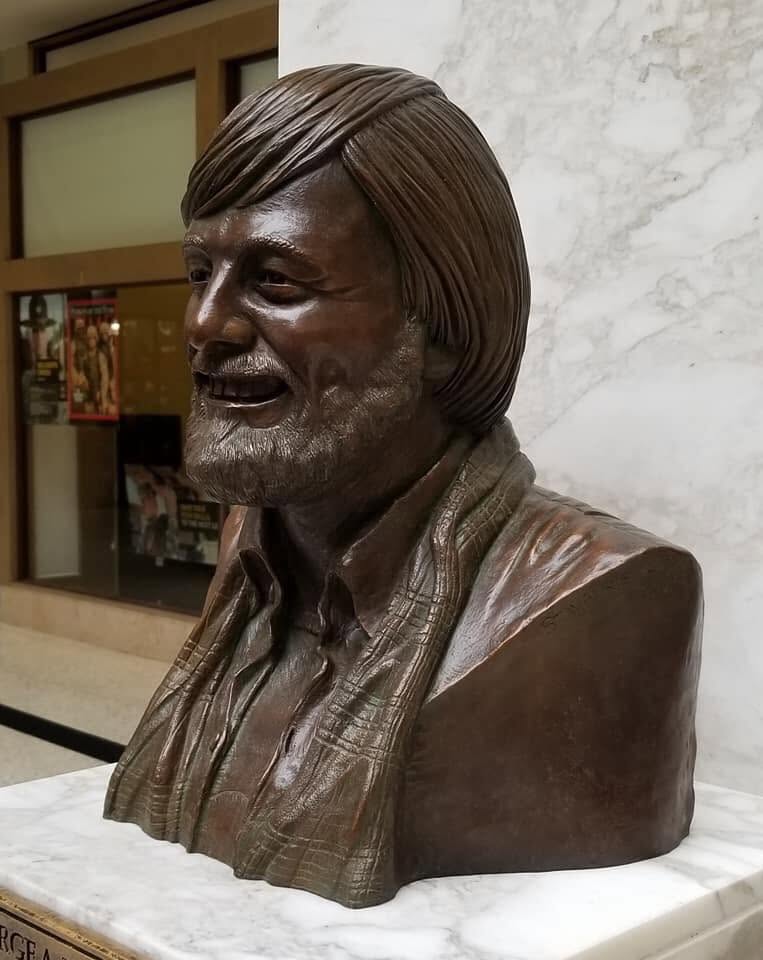
George A. Romero died on July 16, 2017, after a brief but aggressive battle with lung cancer. leaving behind one of the most important bodies of work in horror history.
Romero’s influence is difficult to overstate. Without Night of the Living Dead, the modern zombie as audiences know it would likely not exist in the same form. Without Dawn of the Dead, zombie cinema might never have become such a powerful vehicle for satire. Without Day of the Dead, the genre might have taken longer to fully explore the collapse of authority, science, military order, and human reason.
His films influenced generations of filmmakers, writers, artists, game designers, makeup effects creators, and independent producers. They also proved that horror could be made outside Hollywood, with local talent, limited money, strong ideas, and a willingness to confront uncomfortable truths.
George A. Romero did not just introduce audiences to zombies. He changed how horror thinks, how it looks at society, and how it forces viewers to look at themselves. His dead still walk, but his ideas remain even harder to kill.