

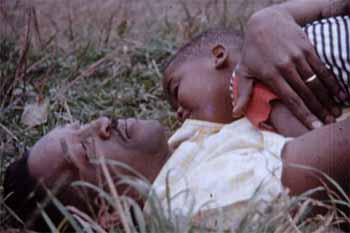
Long before Night of the Living Dead transformed independent filmmaking, George A. Romero was already experimenting with visual storytelling on the streets of Pittsburgh.
One of the most significant surviving works from this formative period is Expostulations, an ambitious early project developed by Romero with Richard Ricci, Rudy Ricci, Ray Laine, and other members of his emerging Pittsburgh filmmaking circle.
Russ Streiner was initially invited to appear as an actor and became increasingly involved with the production after joining it. John Russo and, later, Gary Streiner also contributed as the project developed. Filmed without synchronized sound, the anthology was conceived as a collection of short subjects accompanied by music, dialogue, and poetic narration.
The filmed material was edited into a completed visual assembly, but its planned soundtrack was never produced. For decades, the elements were believed to have been lost. Following the rediscovery of surviving footage, the George A. Romero Foundation began preserving the material and developing a presentation that honors what Romero and Ricci originally envisioned for its music, dialogue, and poetic narration.
After circulating during the restoration process under the titles The Man with the Revolver and Romero’s Elegy, the surviving film has returned to its original name: Expostulations.
Romero’s First 16mm Film Project
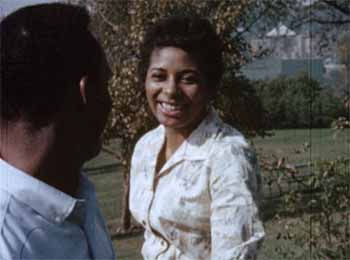
The origins of Expostulations can be traced to the earliest years of Romero’s filmmaking career.
Romero had begun making films while attending Suffield Academy, where he established RAM Productions in 1957. By the beginning of the 1960s, he was determined to obtain a professional 16mm camera and expand the scale of his work.
That camera became an essential tool in Romero’s development. Working alongside his early collaborators, Romero filmed a series of experimental stories in and around Pittsburgh.
These films offer a rare view of an emerging artist testing ideas involving alienation, violence, social observation, surrealism, and dark humor, subjects that would recur throughout his career.
What Was Expostulations?
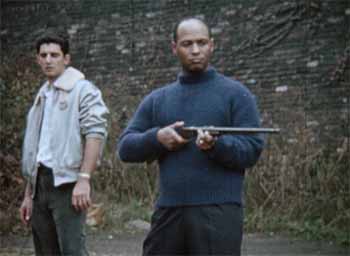
Expostulations was conceived as an anthology designed to demonstrate the range of Romero and his collaborators.
The complete production reportedly incorporated several short films and linking sequences, including:
• The Rocket Ship – A comic science-fiction story featuring Richard Ricci in which extraterrestrials crash into an ice cream cone being eaten by Romero.
• Trilogy… the Agelessness of Man – A dramatic story involving a young boy who witnesses the murder of his father. In 1990, Romero referred to this portion of the film as Connection.
• A Door Against the Rain – A Richard Ricci story centered on a mysterious door standing in a yard and the contrast it creates with the protagonist’s everyday life. Cramer Riblett played the grandfather, and portions were filmed in Mark Ricci’s apartment.
• Average Morning – A Romero-directed montage observing commuters as they begin their day.
• The Framistan – A surreal Romero and Ricci collaboration involving a Rube Goldberg-style machine and a world in which everyone except the central character disappears.
The anthology reportedly opened and closed with sequences featuring Ernie Coombs, who later became widely known to Canadian audiences as Mr. Dressup. In the opening sequence, Coombs looks toward the sky after something gets into his eye, inadvertently causing a crowd to gather and stare upward with him.
The complete version may have run approximately two and a half hours. Most of that material remains missing.
What survives is a remarkable 21-minute film photographed on location in Pittsburgh. The footage contains no recorded dialogue or production sound, reflecting the original plan to complete the work later with music, narration, and other audio elements.
A Film Without Its Soundtrack
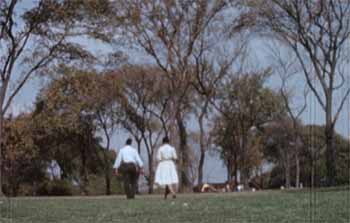
Romero and his collaborators completed the photography and visual editing of Expostulations, assembling the material into an anthology reportedly running approximately two and a half hours. What the production lacked was its intended soundtrack, which was to include jazz, recorded dialogue, and poetic narration.
During the editing process, Romero received assistance from personnel at Pittsburgh Film Lab, which operated on the first floor of 247 Fort Pitt Boulevard. John Zwergel helped teach him some of the technical details of motion-picture editing, including the use of edge numbers to identify and organize individual frames of film.
An arrangement was later made with LaVere Studios and Jacob “Jack” Walter Pletsch under which Romero’s emerging production company would create commercials in exchange for help completing the soundtrack. LaVere Studios went out of business in 1963 before that work could be finished.
The Latent Image was formed during the second half of 1962, most likely around August. Richard Ricci left to serve in the Navy later that year. Before departing, he made an important contribution to the new company’s future by paying the rent on a Pittsburgh storefront, providing The Latent Image with its first physical headquarters.
In early 1964, The Latent Image moved into the former LaVere facilities on the fifth floor of 247 Fort Pitt Boulevard. The commercial and industrial work produced there helped Romero and his collaborators develop the technical experience, resources, and professional relationships that eventually led to Night of the Living Dead.
Believed Lost
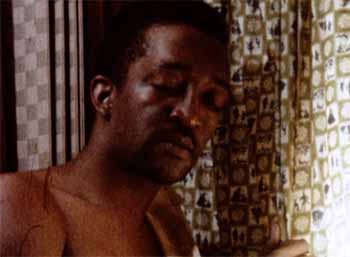
For many years, the elements associated with Expostulations were believed to have been destroyed in a basement flood.
The discovery of surviving footage therefore represented much more than the recovery of an early film whose soundtrack had never been completed. It restored an important missing chapter in Romero’s development and provided a visual record of his work several years before Night of the Living Dead.
Even at this early stage, the material reveals the curiosity and independence that would define Romero’s later films. Rather than simply documenting Pittsburgh, he used its streets, buildings and neighborhoods as expressive environments in which personal, social and political anxieties could unfold.
The George A. Romero Foundation began preserving the surviving film with the assistance of people closely connected to Romero’s life and career, including co-producer Gary Streiner, Ron Haas, and filmmaker and Foundation board member John Harrison.
The goal was not to make the footage appear to have been newly photographed. The restoration was intended to stabilize the film, repair age-related damage and preserve the qualities of the original 16mm material.
Richard Ricci’s Final Contribution
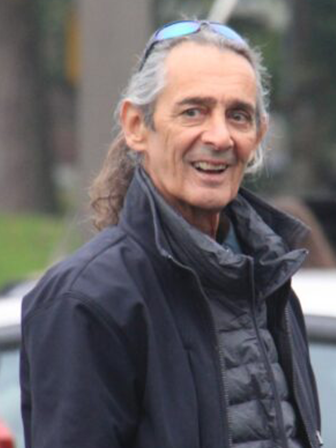
Richard J. Ricci, known to his friends on Romero’s team as “The Rev,” was instrumental in identifying the surviving footage and reconstructing its history.
Because the film had originally been intended to incorporate poetry, Ricci was invited to provide the words that he and Romero had never been able to record.
In 2020, Ricci spent approximately nine months writing a poem to accompany the rediscovered images. He submitted the completed piece only four days before his death in July 2020.
His poem transformed the restoration into something deeply personal. It was no longer only the recovery of an early Romero film, it also became the completion of a collaboration interrupted for nearly six decades.
Actor Terry Alexander, remembered by Romero audiences for his performance as John in Day of the Dead, was selected to narrate Ricci’s text.
In recognition of his foundational contributions to Romero’s career and his indispensable role in the film’s recovery, Ricci was named the recipient of the George A. Romero Foundation’s 2021 Pioneer Award. His brother, Edmund Ricci, accepted the honor on his behalf.
From Trilogy to Romero’s Elegy and Back to Expostulations
Several names became associated with the surviving footage as its history was reconstructed. A surviving portion of Richard Ricci’s original poem indicates that the dramatic vignette was titled Trilogy: The Man with the Revolver.
As restoration work progressed and Ricci’s newly written poem became central to the presentation, the recovered 21-minute film was publicly introduced as Romero’s Elegy. The title reflected the emotional circumstances surrounding Ricci’s final contribution and helped distinguish the surviving piece from the much larger anthology Romero and his collaborators had originally created.
The Foundation has since returned the film to Romero’s original overarching title, Expostulations. The name reconnects the surviving material with the full anthology from which it came while preserving Ricci’s poetry and the work completed in his memory.
Restoring Expostulations
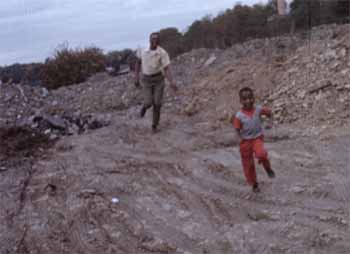
In 2022, the George A. Romero Foundation launched a public fundraising campaign seeking $10,000 to complete the restoration and presentation of the film.
Supporters surpassed the campaign’s goal, enabling the Foundation to continue preserving the footage, incorporating Ricci’s poetry, and preparing the film for audiences.
The restoration is part of the Foundation’s larger effort to identify, preserve, and present lesser-known works from Romero’s career. Recovering Expostulations is particularly important because it expands the surviving record of Romero’s pre-Night of the Living Dead work.
It demonstrates that his development as a filmmaker did not begin suddenly in 1968. Years earlier, he was already assembling collaborators, developing independent production methods, and using genre, satire, and social observation to explore the world around him.
World-Premiere Presentation
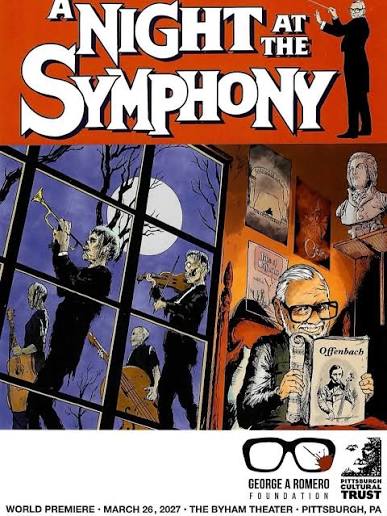
Expostulations will receive its world-premiere presentation during George A. Romero’s A Night at the Symphony on March 26, 2027, at Pittsburgh’s historic Byham Theater.
Created by Pittsburgh composer Christian Kriegeskotte, the program celebrates Romero’s life, work, and influences through performances by a 30-piece orchestra. The evening will include newly arranged music from films such as Night of the Living Dead, Martin, Dawn of the Dead, Knightriders, and Day of the Dead.
The centerpiece of the event will be the first public screening of Expostulations, presented with Terry Alexander’s narration and a newly commissioned orchestral score performed live.
The location carries special significance. The Byham Theater was known as the Fulton Theater when Night of the Living Dead premiered there in 1968. Nearly six decades later, audiences will gather in the same building to experience a film Romero created before that landmark production changed cinema history.
Once believed destroyed, Expostulations can finally be seen, heard, and recognized as an essential part of Romero’s legacy.
Tickets for A Night At The Symphony can be purchased here.
Revisiting Expostulations for Reelside
In 2015, George A. Romero revisited Expostulations in an episode of the Canadian documentary series Reelside.
The second episode of the program’s first season, titled “George A. Romero,” premiered on June 11, 2015. It followed actor and filmmaker Philip Riccio (who played Ridley in Romero’s 2006 film Diary of the Dead) as he sought to experience the methods used to make motion pictures before digital production became standard. Riccio turned to Romero, his mentor, for guidance.
For the episode, Romero and Riccio set out to recreate material from Expostulations, which was then described as one of Romero’s lost early films. Romero guided Riccio through the traditional 16mm process, including photographing scenes on film, physically cutting the footage, and considering the differences between photochemical and digital filmmaking. The project also gave Romero an opportunity to reflect on his early career and the hands-on production methods through which he learned his craft.
The episode demonstrates that Expostulations remained important to Romero more than five decades after its creation. He described the original anthology as his first professional filmmaking effort and “the real beginning” of his career. You can watch the episode here.